How I Fell In Love With Design Again
I left my full-time job as Director of Product Design at Fictiv in August 2025 in order to pursue my own practice. Although I was still fairly hands on with my team in my final years there, it started to feel like I was quickly losing touch with contemporary workflows.
I took my break as an opportunity to revisit my workflows and simply enjoy building for the sake of satisfying my curiosity. The first thing I did was subscribe to Anthropic’s Pro Plan so that I could use Claude Code. By this point, it was obvious from talking to my software engineering friends that this was a legitimate coding assistant.
My first project was simple and fun. Every year, a few close friends and I create a collaborative playlist that we add to throughout the year. I usually put it on shuffle and found myself playing a game and trying to guess who added a given song without looking at the app. So I took this idea and turned it into a little coding project. It was basic and silly, but it gave me a taste of building something that mostly worked.
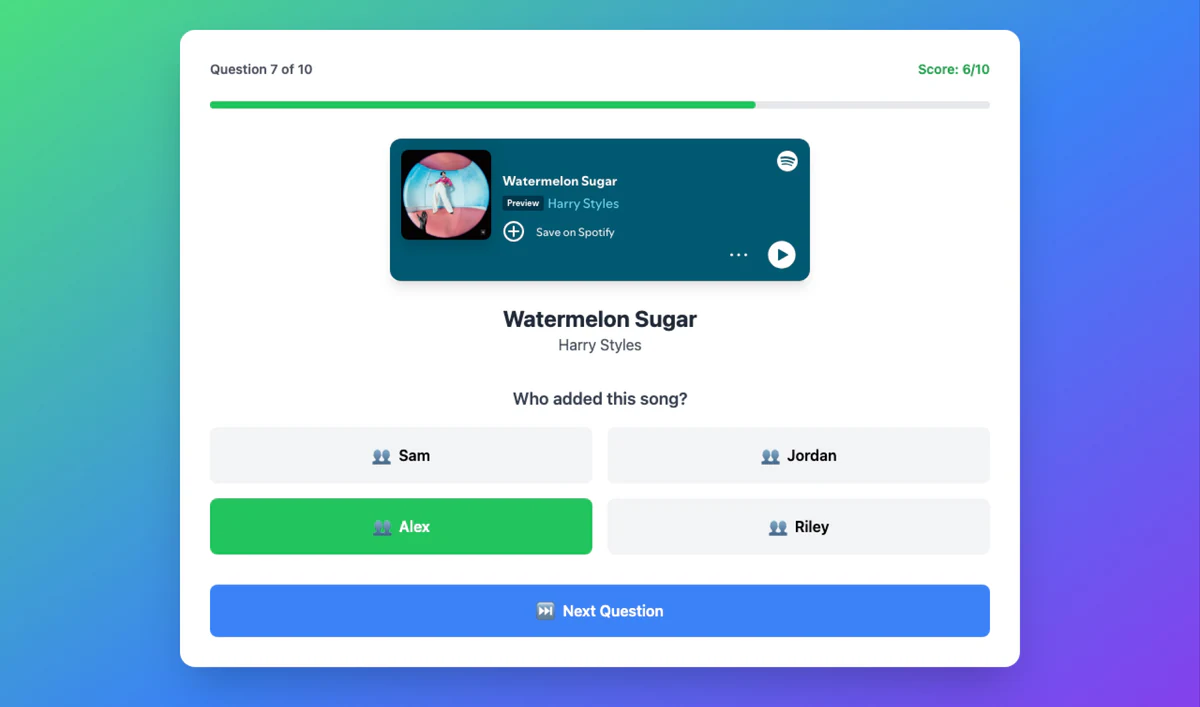
Safe to say, I was hooked.
For years, I’d attempted some coding tutorial in order to build something I had in my head, but I’d inevitably encounter some bug or issue that would stop me dead in my tracks. It’s not that code was some completely foreign entity to me, quite the contrary. Throughout my career, I’ve loved interrogating my teammates in order to understand the technical details. I enjoy solving problems, especially engineering ones, but hitting a wall when something wasn’t working was hard to get past on my own.
I found that changed dramatically once I started using Claude. It stopped feeling like I was struggling by myself and started to feel like I was building with a partner. Watching Claude make mistakes or get confused actually made me feel more committed to finishing the work. In addition to the desire to see projects through, the barrier to entry was lowered so much that I stopped thinking about whether I should or should not experiment with whatever idea was in my head — I started to just do.
In design school, you learn to think with your hands.
What this means is getting ideas out of your head and into the real world. For us, that often took the form of sketching, but it can be anything that manifests your idea. In that moment, taking the idea from the abstract to the physical, a transformation occurs. The idea stops being pure and becomes imperfect. You’re confronted with the reality of your idea and it gives you something to react to.
Being able to turn my ideas into a reality in a few hours, as opposed to many days, was thrilling. One idea came up while a friend was trying to answer a UI question: how to show an AI thinking versus speaking. I pictured a swarm of a million particles, clustering when it spoke, scattering like boids when it thought, bits of information going out and then gathering back to answer. When such an idea would come up before, I might dismiss it for complexity. Instead, I took an afternoon to prototype it.
The ability to create the tools that help me make decisions about animation is a real boon. This is just next level prototyping and I’m here for it.
I also found myself outsourcing tasks to Claude so I could put my energy towards other creative outlets. It reminded me of the many times I unlocked a new superpower with software: learning Blender, Figma, Photoshop and more. We are at a moment in time when anybody with a healthy curiosity can access information from anywhere in the world. All of this is to stay, generative AI is not going to rob anybody of their passions.
Incorporating these tools into my workflow has me feeling more creative, experimental, and eager to build things. That said, I also see the terrible downsides the technology has on our society. It’s impossible to ignore the negative impact that it’s having, but our anger ultimately needs to be directed to those in power, rather than the technology itself.
For now, I think the risks lie with the people who are not thinking critically. Using generative AI to build tools for yourself to be more productive is hardly handing over the reins.